The Story
Some ideas are worth standing for, even when standing comes at a cost.
Inhiraaf draws from the life, words, and resistance of Faiz Ahmed Faiz — a poet whose writing carried the weight of conviction, justice, love, and freedom.
In 1951, Faiz was arrested in the Rawalpindi Conspiracy Case, accused alongside military officers and political figures of involvement in a plot against the government. He was sentenced to imprisonment and spent years behind bars. Yet imprisonment never diminished the ideas he stood for. If anything, his years in confinement became deeply intertwined with the poetry through which he continued to speak.
One of the most enduring stories from this period tells of Faiz being taken from prison to a dentist while in chains. As people recognised him and followed his carriage, the image of a poet being taken through the streets in shackles became the seed for Aaj Bazaar Mein Pa-Ba-Jaulaan Chalo — a poem that transforms humiliation into defiance and confinement into an act of public resistance.
Inhiraaf takes that spirit forward.
Not as a reproduction of the past, but as an expression of what remains: the courage to resist, to question, and to stand by what you believe in even when the easier choice is to remain silent.
The Front
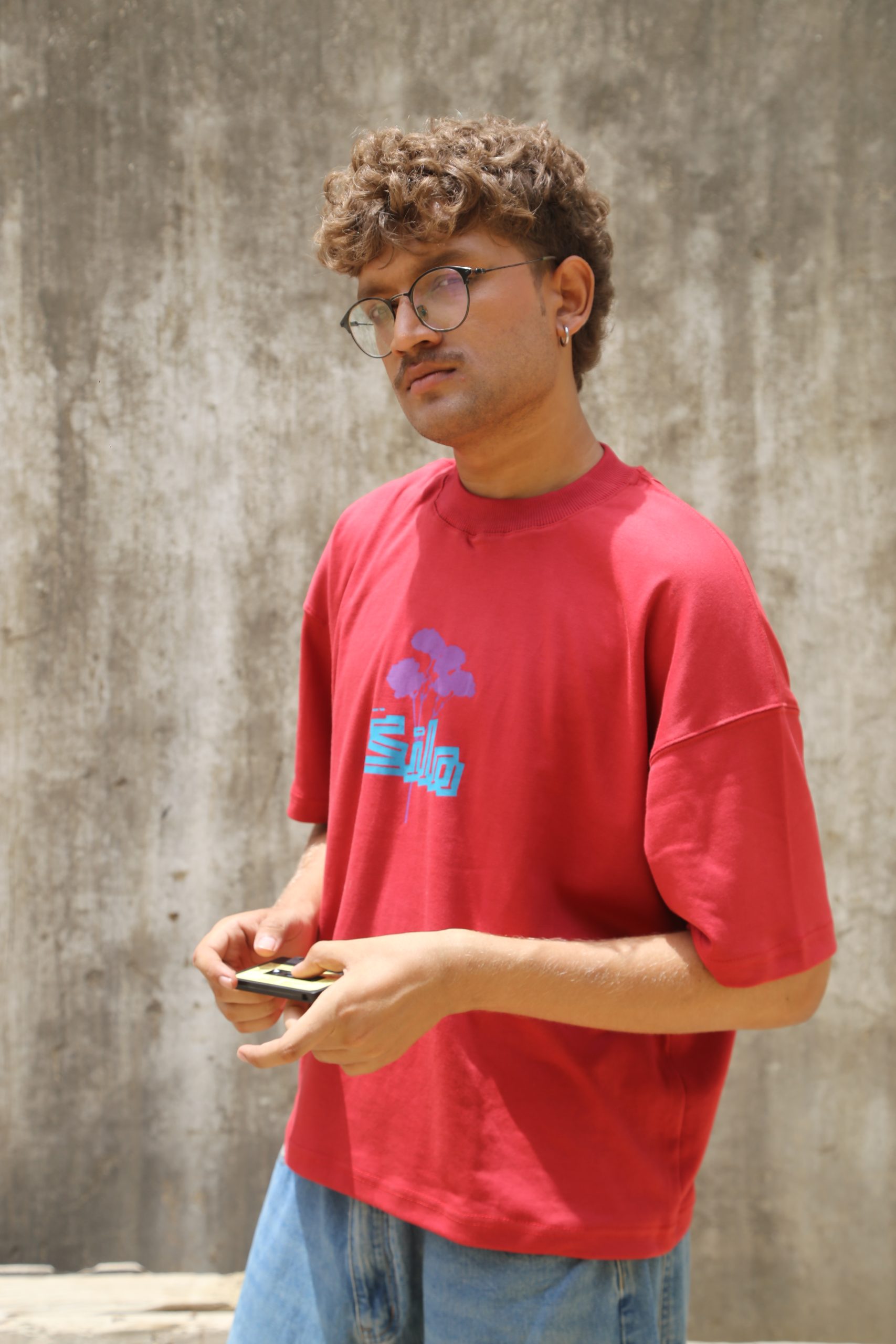
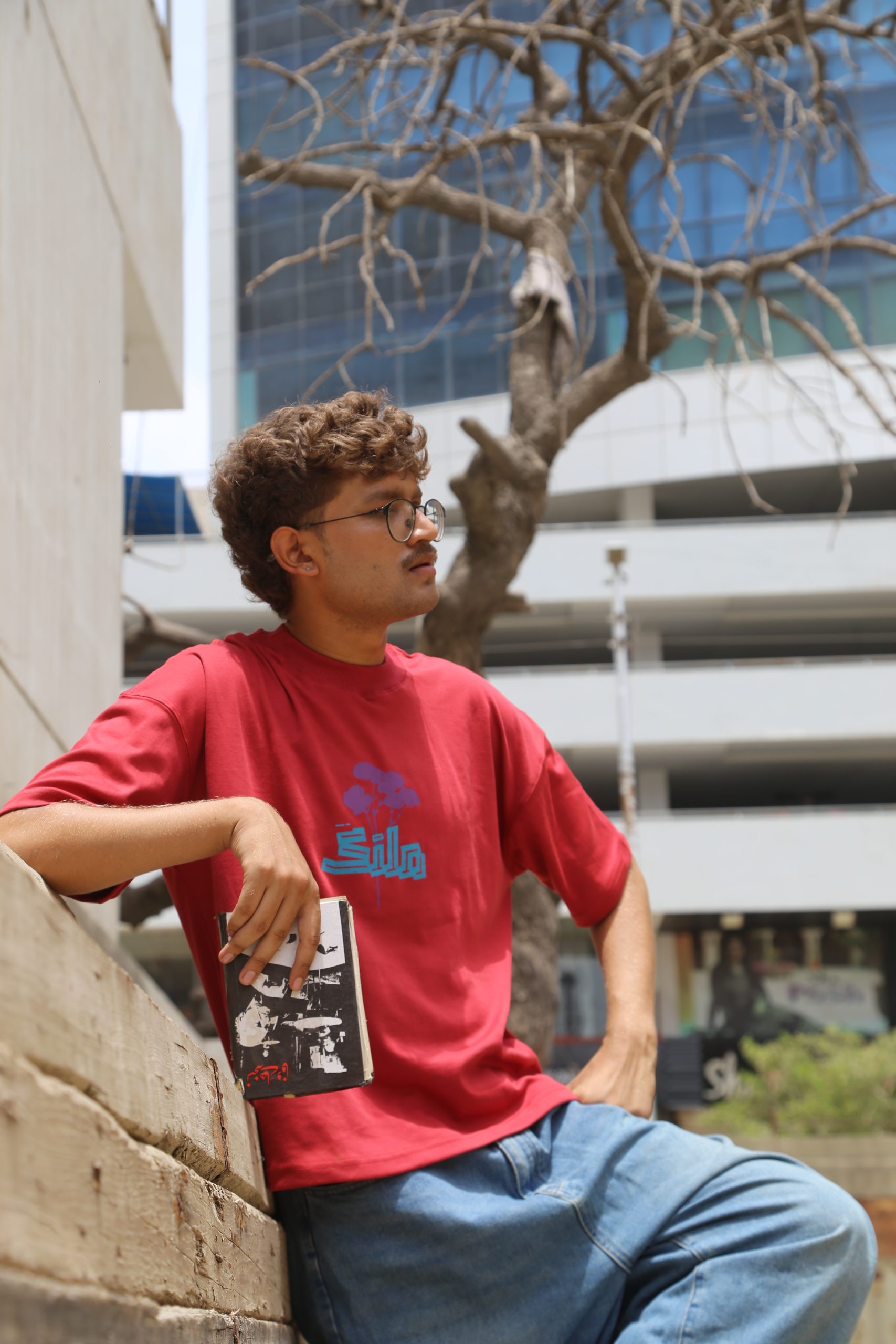
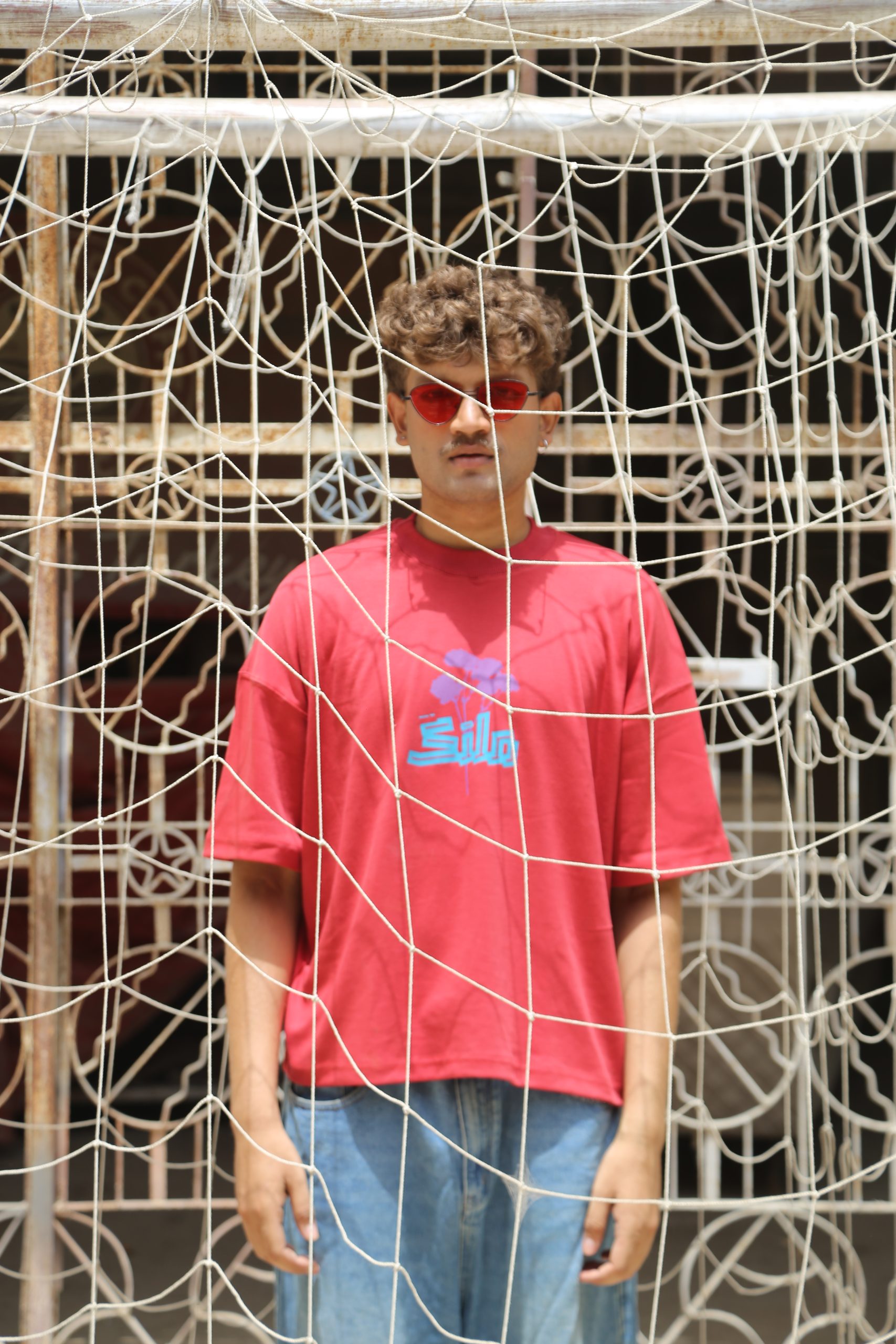
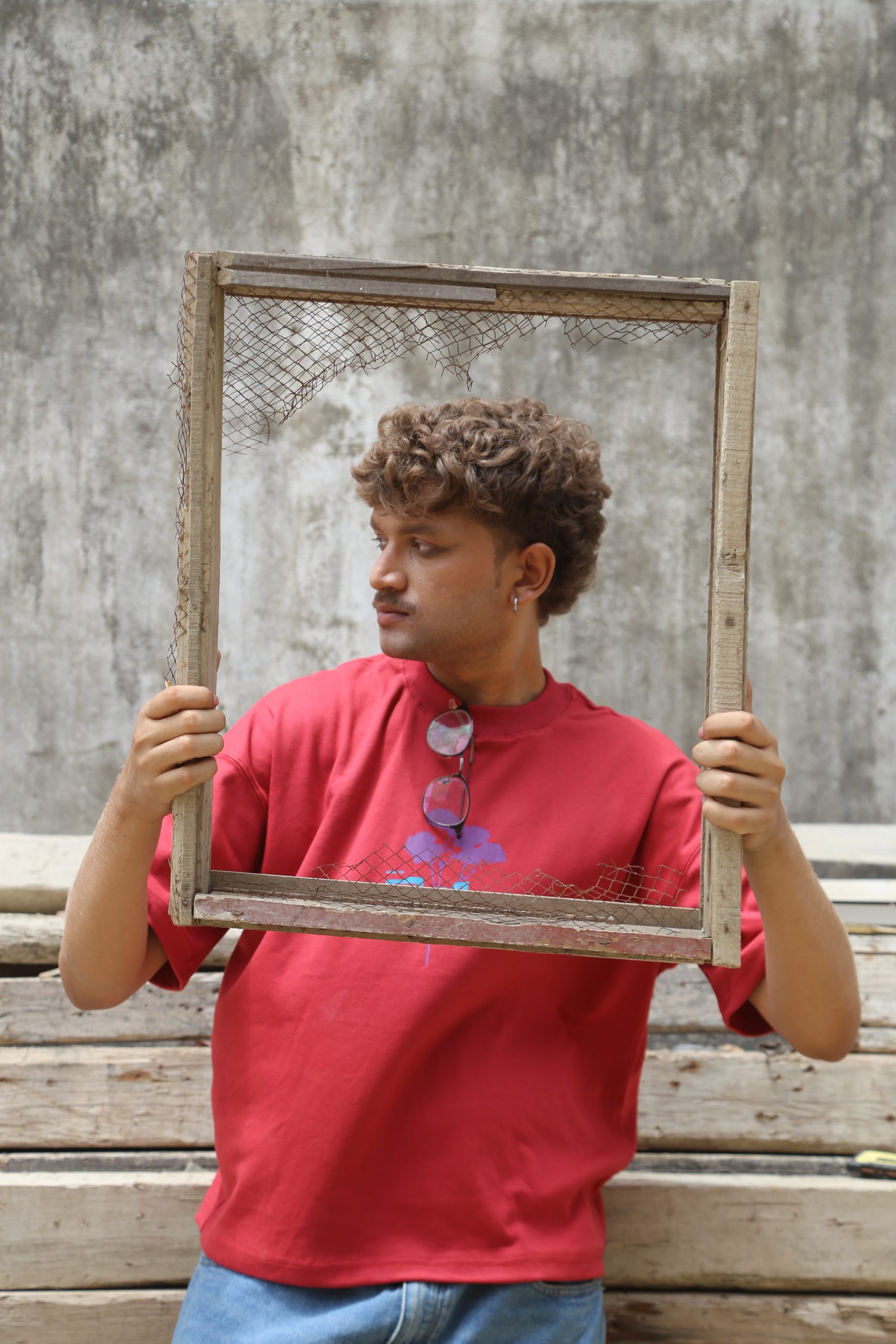
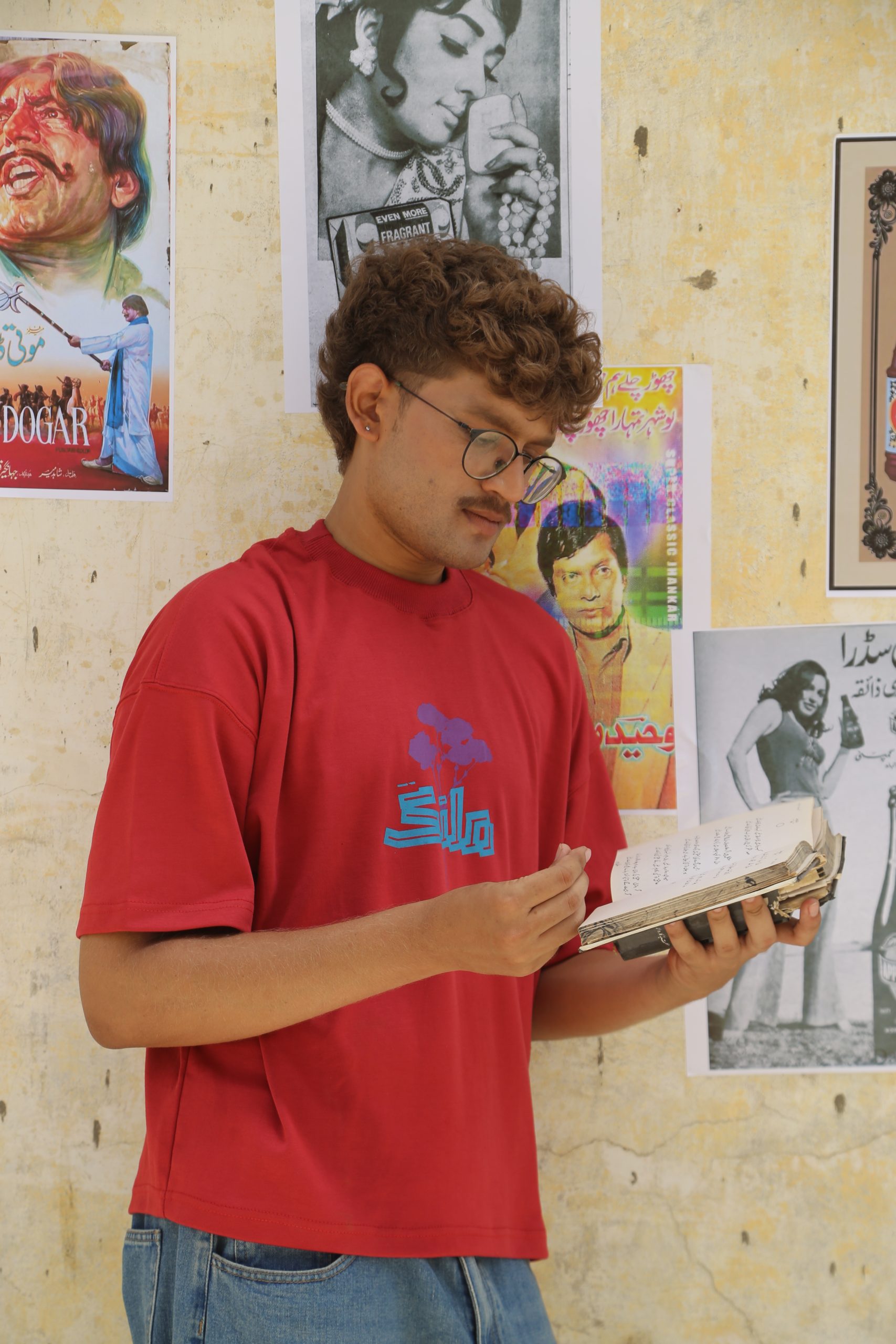
The front carries the MALANG name in a screen-printed treatment, accompanied by a dry-flower motif.
The fragile, weathered form of the flower becomes an intentional contrast to the idea of resistance — a reminder that strength does not always need to appear loud or aggressive. Sometimes, resistance exists quietly in what continues to stand, grow, and express itself.
The artwork is designed as an expression rather than a literal representation — a meeting point between fragility, individuality, and defiance.
The Back
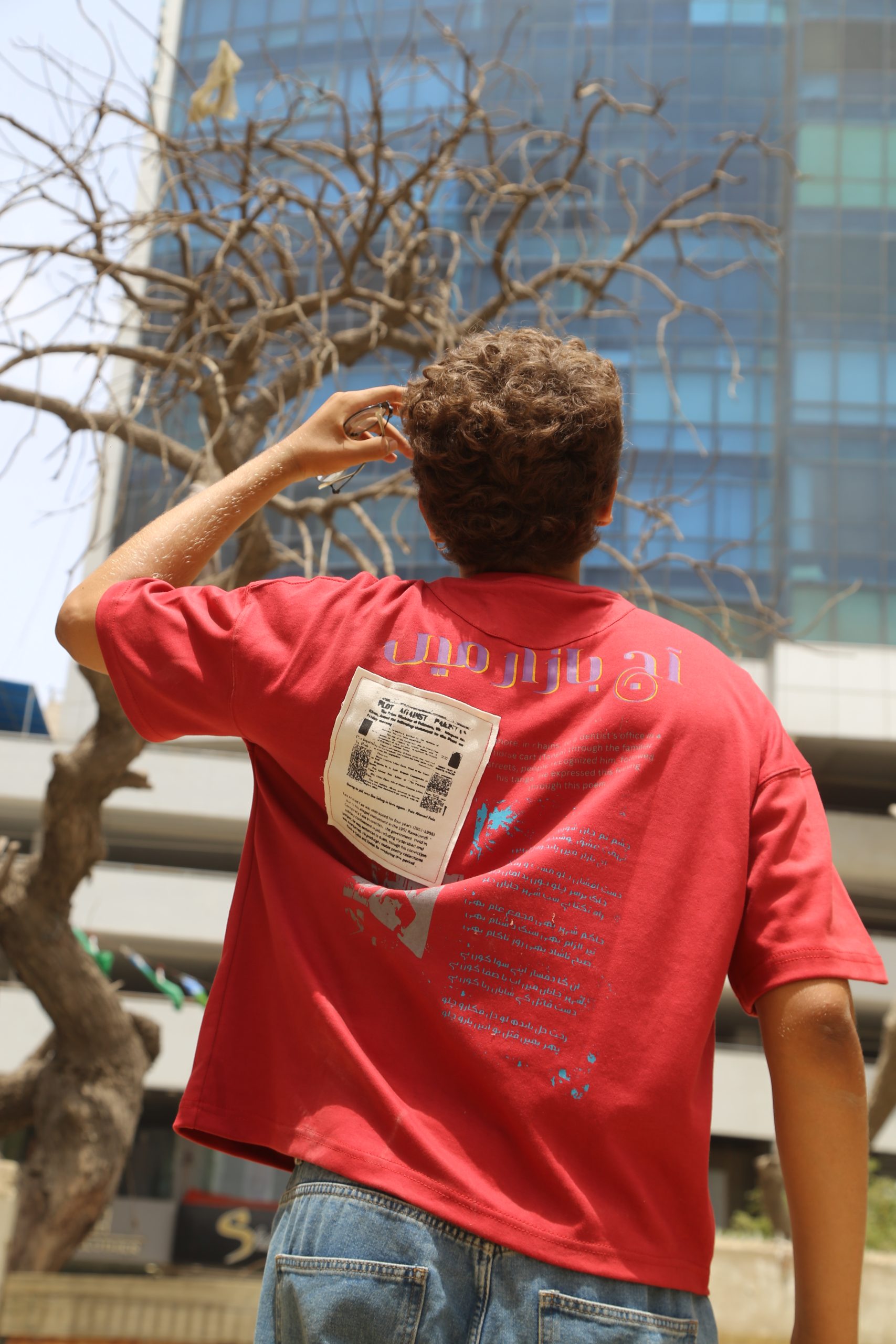
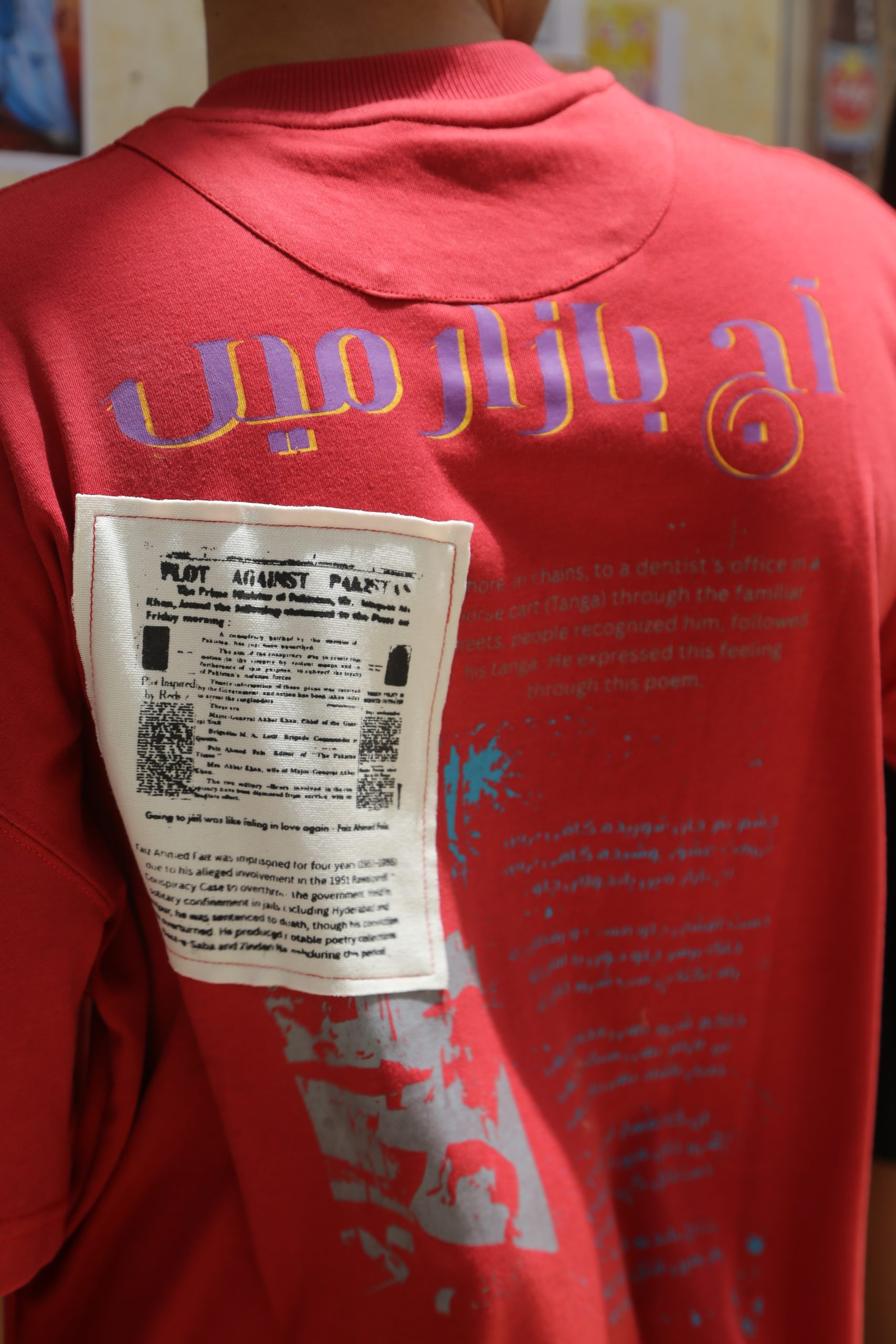
The back brings together several fragments of Faiz’s story and the poetry that emerged from it.
A cut-and-applied newspaper patch references the Rawalpindi Conspiracy Case, the historical event that led to Faiz’s imprisonment. Alongside it, a written account recalls the journey from prison to the dentist — the episode traditionally associated with the moment that inspired Aaj Bazaar Mein Pa-Ba-Jaulaan Chalo.
At the centre sits the complete visual reference to Aaj Bazaar, screen printed in Urdu, with “Aaj Bazaar Mein Pa-Ba-Jaulaan Chalo” serving as its defining heading.
The back is completed with a screen-printed interpretation of the cover of Nuskha-e-Wafa, bringing together the poetry and literary legacy of Faiz in one layered composition.
The result is not simply an illustration of a poem. It is a collection of fragments — imprisonment, poetry, conviction, and resistance — assembled into one wearable tribute.
Care Instructions
- Hand wash recommended.
- Wash separately or with similar colours.
- Avoid machine washing to preserve the printed and patchworked artwork.
- Turn inside out before washing.
- Avoid harsh detergents and excessive rubbing over printed or patched areas.
- Do not expose directly to harsh sunlight for extended periods.
- Dry in shade.
Craft & Finish
The article combines screen printing with cut-and-applied patchwork to create a layered visual language.
The patchwork elements are deliberately integrated into the garment rather than treated as conventional flat graphics, giving the artwork a tactile, assembled quality.
Slight variations in print, placement, and handmade application may occur. These variations are part of the character of the piece and reflect the hands-on nature of its making.
Reviews
There are no reviews yet.